





How to use · 6 min read
How to use magnesium spray on your feet before bed
A few sprays, a minute of massage, then lights out. The full feet-before-bed ritual, why it can tingle, and what magnesium spray actually is.

Quick answer
Spray magnesium onto clean, dry feet (soles and tops) as part of your bedtime routine, start with a few sprays per foot, and massage it in for a minute. Let it settle before socks or sheets. If it tingles, use less or spray onto damp skin after a shower. Skip broken or freshly shaved skin, and patch test first.
On this page
- What is magnesium spray, exactly?
- Why the feet, and why at bedtime?
- How do you use magnesium spray on your feet, step by step?
- How do you make it a ritual, not a chore?
- Unscented or scented: which should you pick?
- Should you use magnesium spray or magnesium body butter on your feet?
- Is it normal for magnesium spray to tingle on the feet?
- What mistakes should you avoid?
- Who should check before using it?
What is magnesium spray, exactly?
Magnesium spray is magnesium chloride dissolved in water. People often call it "magnesium oil" because it feels slippery on skin, but there is no oil in it.
The salt is magnesium chloride, usually sold as white, water-soluble crystals (PubChem). When it's dissolved at high strength the liquid feels silky, and a little tacky as the water evaporates. That's the texture you notice on your feet.
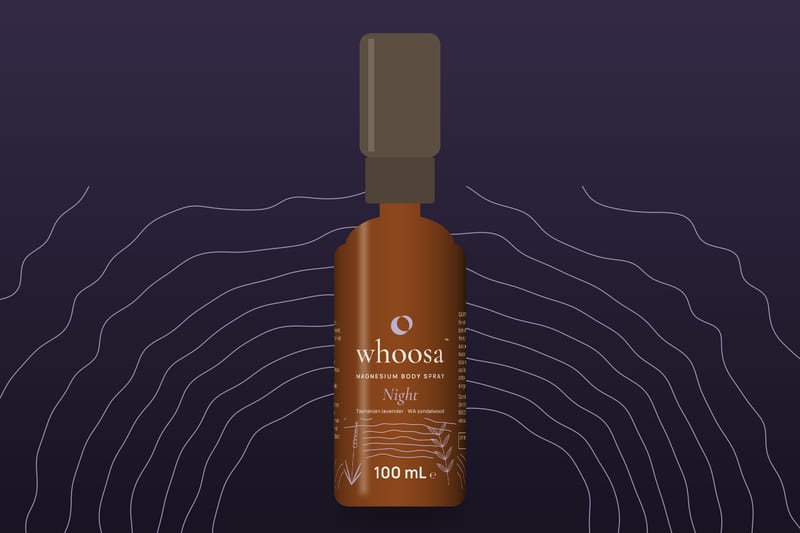
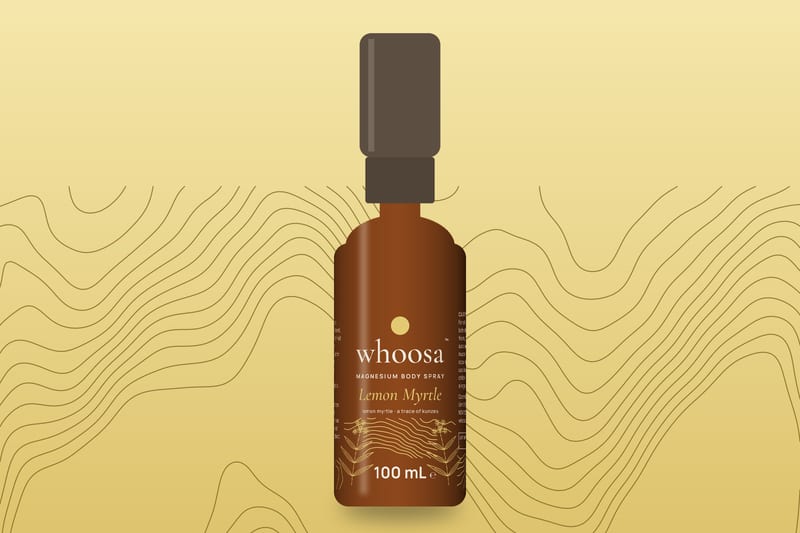
Our main Magnesium Body Spray is Unscented: magnesium chloride and water in a 100 mL amber glass bottle. We also make two small-batch scents, Night and Lemon Myrtle.
Why the feet, and why at bedtime?
Feet are simply an easy, low-fuss spot: you're already sitting on the edge of the bed, the skin on the soles is thick, and nothing needs to dry under clothes.
The rest is ritual. A few slow minutes at the same time each night is a well-worn habit for marking the end of the day, and a consistent, calm routine before bed is common advice (bedtime routine guide). Magnesium spray is one way to fill those minutes: a cool mist, a foot rub, a scent you only meet at night.
A note on honesty: you'll read big promises online about magnesium passing through the feet into the body. A 2017 paper in Nutrients concluded the evidence for this is limited and that larger, well-designed studies are still needed (Gröber et al., 2017). We sell WHOOSA as a cosmetic body ritual, not a supplement or a remedy.
How do you use magnesium spray on your feet, step by step?
Clean, dry feet, a few sprays, a minute of massage, then let it settle. In full:
- Start clean. After a shower is ideal. Pat your feet dry, or leave them just slightly damp if you find the spray tingles.
- Shake and spray. Hold the bottle 10–15 cm away and mist the soles and tops of each foot. Start with a few sprays per foot. You can add more on later nights.
- Massage it in. Use your thumbs along the arch and heel for about a minute. This is the bit that turns a product into a ritual.
- Let it settle. Give it a few minutes. It can feel a little tacky as it dries, which is normal for magnesium chloride.
- Socks or sheets. Pull on cotton socks if you like, or just get into bed.
- Rinse in the morning if you want. Some people like to wash off any residue; others don't bother.
A mist, a minute, lights out.

How do you make it a ritual, not a chore?
Tie it to something you already do every night, keep the bottle where you'll see it, and give it the same minute each time.
It is easier to remember when it hangs off something you already do. For most people that is the moment you sit on the edge of the bed. Try this order:
- Lights down. Switch to a lamp, put the phone on the charger across the room.
- Sit, spray, breathe. Mist each foot, then take three slow breaths while it settles.
- One-minute foot rub. Thumbs along the arch, heel to toe, a few circles around the ankle.
- Done. Socks on or straight under the covers.
Some nights you'll want longer. Swap the spray for a bath soak and finish with the butter. Other nights, ten seconds of spraying and a quick rub is plenty. The point is a small, repeatable signal that the day is over.
Unscented or scented: which should you pick?
Start with Unscented if your skin is sensitive, you share a bed with someone who dislikes fragrance, or you simply want the plainest option. It is our main spray for that reason.
If you like a scent cue at the end of the day, try one of our two small-batch scents. Night pairs Tasmanian lavender with West Australian sandalwood, Santalum spicatum, a small tree native to the semi-arid country of Western Australia and South Australia (Wikipedia). Lemon Myrtle uses leaf oil from Backhousia citriodora, a rainforest tree from subtropical Queensland whose leaves smell strongly of lemon thanks to citral (Wikipedia).
We keep both scents light because they sit on your skin. Whichever you choose, patch test first and skip freshly shaved skin.
Should you use magnesium spray or magnesium body butter on your feet?
Use the spray if you want something light and quick; use a butter if your feet are dry and you want a richer massage.
| Spray | Body butter | |
|---|---|---|
| Texture | Light mist, slightly tacky as it dries | Rich, cushioned, glides for massage |
| Best for | Quick nightly step | Dry heels, longer massage |
| Tingle | More likely | Less likely (oils buffer it) |
| Whoosa product | Magnesium Body Spray | Magnesium Body Butter |
Or layer them: spray, let it settle for a minute, then smooth the butter over the top. That pairing is our Night Set.
Layering also suits dry heels. Magnesium spray on its own can leave very dry skin feeling tight once the water evaporates; a rich butter on top gives the skin something to hold on to. DermNet notes that regular use of a moisturiser, especially straight after bathing, is the mainstay of caring for dry skin (DermNet).
Is it normal for magnesium spray to tingle on the feet?
Yes, a mild tingle or itch is common with magnesium chloride sprays, especially on dry or freshly shaved skin. If it stings, burns or turns red, wash it off and stop using it.
We cover the reasons and fixes in Why does magnesium spray sting or itch?. Short version: use less, apply to slightly damp skin, avoid broken skin, and patch test first.
What mistakes should you avoid?
Most problems come from too much product, the wrong skin, or the wrong moment.
- Spraying straight after shaving your legs. Wait until the next day.
- Drenching the skin. A few sprays per foot is plenty to start.
- Rubbing it into cracked heels. Let cracks settle first; use the butter instead.
- Spraying near your face. Keep it below the knee and away from eyes.
- Expecting too much of it. Enjoy it for what it is: a cool mist and a minute to yourself.
Who should check before using it?
If you're expecting a baby, using it on children, or have any skin condition, ask your doctor or pharmacist first. Never use it on broken skin, and keep it away from eyes.
FAQ
How many sprays of magnesium should I put on each foot?
Start with a few sprays per foot and follow the directions on your pack. There's no benefit in drenching the skin; more spray mostly means more tackiness.
Should I wash off magnesium spray?
You don't have to. If it feels tacky or itchy, rinse it off after 20–30 minutes or in the morning.
Can I put socks on after magnesium spray?
Yes. Let it settle for a few minutes first so the socks don't soak it up.
Is magnesium spray the same as magnesium oil?
Yes. "Magnesium oil" is a nickname for a concentrated magnesium chloride solution in water. It contains no oil.
What does magnesium spray do?
It's a cosmetic body mist that leaves skin feeling cool and silky, and it gives you a reason to stop for a minute at bedtime. Research on magnesium passing through skin is limited (Gröber et al., 2017), so we make no body-wide claims.
Last updated October 26, 2026
WHOOSA products are cosmetics, for use on the outside of the body only. Article images are AI-generated ingredient studies; product images are design concepts.
Keep reading

Magnesium flakes vs Epsom salt for the bath
Magnesium flakes are magnesium chloride; Epsom salt is magnesium sulfate. How they differ in feel, dissolving and use in the bath, and why we blend both.

Why does magnesium spray sting or itch?
Magnesium spray can tingle because a concentrated salt solution dries on skin. Why it happens, how to make it gentler, and when to wash it off and stop.