
Compare · 6 min read
Magnesium flakes vs Epsom salt for the bath
Two magnesium salts, two very different feels in the water. What each one is, where it comes from, how to use it, and why our soak blends both.
Quick answer
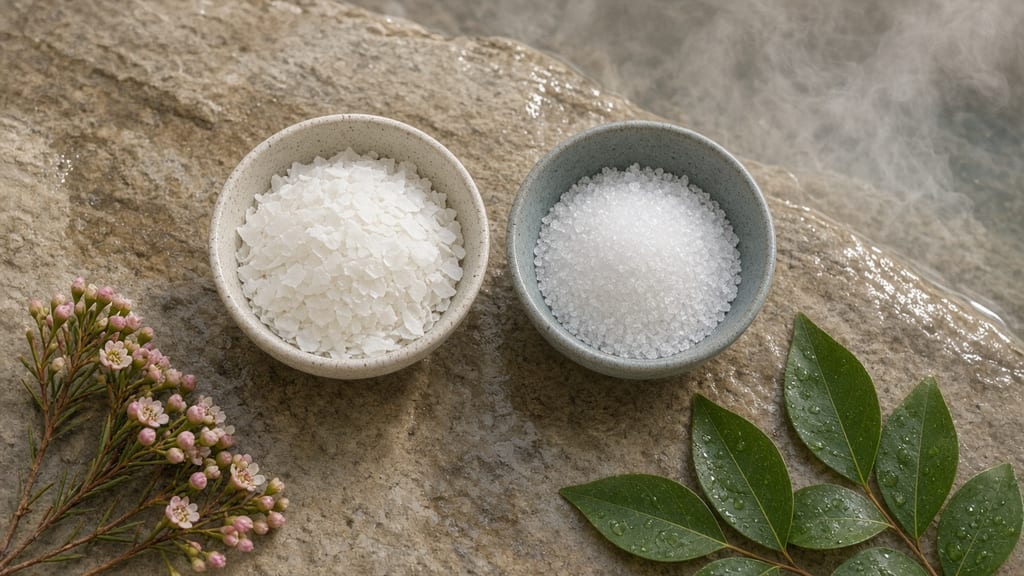
Magnesium flakes are magnesium chloride; Epsom salt is magnesium sulfate. Both are magnesium salts that dissolve in warm bath water. Flakes feel silkier and dissolve fast; Epsom salt is cheaper and the classic "bath salt". Neither is a remedy. Pick by feel and budget, or blend them, as we do in our bath soak.
On this page
- What is the difference between magnesium flakes and Epsom salt?
- Where do magnesium flakes and Epsom salt come from?
- How do they compare side by side?
- Does one get through your skin better?
- Which should you choose for your bath?
- What about scent: what goes well in a magnesium bath?
- Can you use them for a foot soak instead?
- How do flakes and Epsom salt compare on cost?
- How should you store bath salts?
- How do you run a magnesium bath?
What is the difference between magnesium flakes and Epsom salt?
They're two different magnesium salts. Flakes are magnesium chloride (MgCl₂·6H₂O); Epsom salt is magnesium sulfate (MgSO₄·7H₂O).
Epsom salt is magnesium bound to sulfate with seven water molecules, sold as clear granular crystals (PubChem). Magnesium flakes are magnesium chloride with six water molecules. It pulls moisture from the air readily, so it's sold as flat, white flakes in sealed bags (PubChem).
Where do magnesium flakes and Epsom salt come from?
Most magnesium flakes are Zechstein magnesium chloride from the Netherlands; Epsom salt is named after a spring in England and is now made at scale in many countries.
The Zechstein is a sequence of Permian rock layers, laid down when an inland sea evaporated more than 250 million years ago, stretching between the east coast of England and northern Poland (Wikipedia). Magnesium chloride brine is drawn from deep in those layers and dried into flakes. Most magnesium flakes sold in Australia are Dutch Zechstein. Most Epsom salt sold here is imported from Germany. We say so plainly on our pack.
Epsom salt takes its name from a bitter saline spring in Epsom, Surrey, where the salt was first produced from the spring water (Wikipedia). Today the name simply means magnesium sulfate crystals, wherever they're made.
Same mineral family, different feel in the water. Choose by feel.
How do they compare side by side?
| Magnesium flakes | Epsom salt | |
|---|---|---|
| Chemical | Magnesium chloride (MgCl₂·6H₂O) | Magnesium sulfate (MgSO₄·7H₂O) |
| Looks like | Flat, white flakes | Clear, granular crystals |
| In the water | Dissolves very fast; water feels silky | Dissolves easily; classic "salt bath" feel |
| Storage | Draws in moisture; keep sealed | Fairly stable; can cake in humid bathrooms |
| Price | Usually higher | Usually lower |
| On skin after | Can feel slightly slippery | Little residue |

Does one get through your skin better?
Neither has strong evidence behind it. A 2017 paper on magnesium through the skin found the research is small and inconclusive (Gröber et al., 2017).
You'll see claims that flakes "get in better" than Epsom salt, or that a bath cleanses you from the inside. We don't make either claim. What's real is the experience: warm water, a mineral-soft feel, a scent, twenty quiet minutes.
Which should you choose for your bath?
Choose flakes for a silkier soak, Epsom salt for a familiar, budget-friendly bath, or a blend for both.
- Choose flakes if you like a soft, almost slippery water and don't mind paying more.
- Choose Epsom salt if you want a big bag for frequent baths, or a foot soak.
- Choose a blend if you want the feel of flakes with the body of Epsom salt. That's why our Magnesium Flakes + Epsom Bath Soak combines both, scented with Australian natives.
What about scent: what goes well in a magnesium bath?
Clean, green and woody notes suit an evening soak: lemon myrtle, kunzea and sandalwood are three Australian natives we love.
Kunzea, Kunzea ambigua, is a shrub found along the coasts and ranges of south-eastern Australia, including Tasmania, and its leaves are steam-distilled for a fresh, slightly sweet essential oil (Wikipedia). Lemon myrtle, Backhousia citriodora, is the bright one, a citrus-like leaf from Queensland rainforests (Wikipedia).
If you're scenting your own bath, mix a few drops of essential oil into a spoon of carrier oil or the salts first. Neat essential oils float on water and can sit on your skin undiluted.
Can you use them for a foot soak instead?
Yes. A foot soak uses the same salts in a smaller volume, which makes it a good weeknight option when there's no time, or no tub, for a full bath.
Use a basin big enough for both feet, warm water to above the ankles and a small scoop of salts, stirred until dissolved. Ten to fifteen minutes is enough. Pat your feet dry, then massage in a body butter while the skin is still warm. It's also a good way to try the flakes before committing to a big bag: you'll quickly feel whether you like their slippery, silky water.
How do flakes and Epsom salt compare on cost?
Epsom salt is usually the cheaper of the two by weight, which is why it's the default for frequent baths.
Prices vary by brand, bag size and where you buy, so compare by price per kilogram rather than per bag. Bulk bags of either salt work out far cheaper per bath than small jars. A blend sits in the middle: some of the silkiness of flakes, with Epsom salt keeping the cost per bath down.
How should you store bath salts?
Sealed, dry and away from the shower spray.
Magnesium flakes in particular pull water out of the air and can turn into a damp clump, or even a puddle, in a humid bathroom (PubChem). Keep the pouch zipped, use a dry scoop, and store it in a cupboard rather than on the bath edge. If the flakes clump, they still dissolve just as well.
How do you run a magnesium bath?
Warm (not scalding) water, the salts dissolved as the bath fills, then 15–20 minutes of soaking.
- Run the bath warm. Hot enough to enjoy, not so hot your skin goes red.
- Add the salts under the running tap. Follow the amount on your pack; flakes melt almost instantly, Epsom salt takes a little stirring.
- Soak for 15–20 minutes. Phone in another room.
- Rinse and moisturise. A quick rinse, pat dry, then a body butter while skin is still warm.
- Feet only? A basin of warm water with a smaller scoop of salts works too.
Skip the bath if you have broken skin or a skin condition, and check with your doctor first if you're expecting a baby or have any condition. Bath salts are for the bath. Never drink them.
FAQ
Can I mix magnesium flakes and Epsom salt?
Yes. They're compatible magnesium salts and dissolve together in warm water. Many bath soaks, including ours, blend them.
Are magnesium flakes better than Epsom salt?
Not in any proven way. They feel different in the water, and that's the honest reason to choose one over the other.
Is magnesium chloride the same as Epsom salt?
No. Magnesium chloride is magnesium flakes; Epsom salt is magnesium sulfate.
Can I use magnesium flakes as a foot soak?
Yes. Dissolve a small amount in a basin of warm water and soak your feet for 10–15 minutes.
Why do magnesium flakes go wet in the bag?
Magnesium chloride is hygroscopic: it draws moisture from the air. Keep the bag sealed and dry.
Last updated 26 October 2026
WHOOSA products are cosmetics, for use on the outside of the body only. Article images are AI-generated ingredient studies; product images are design concepts.
Keep reading
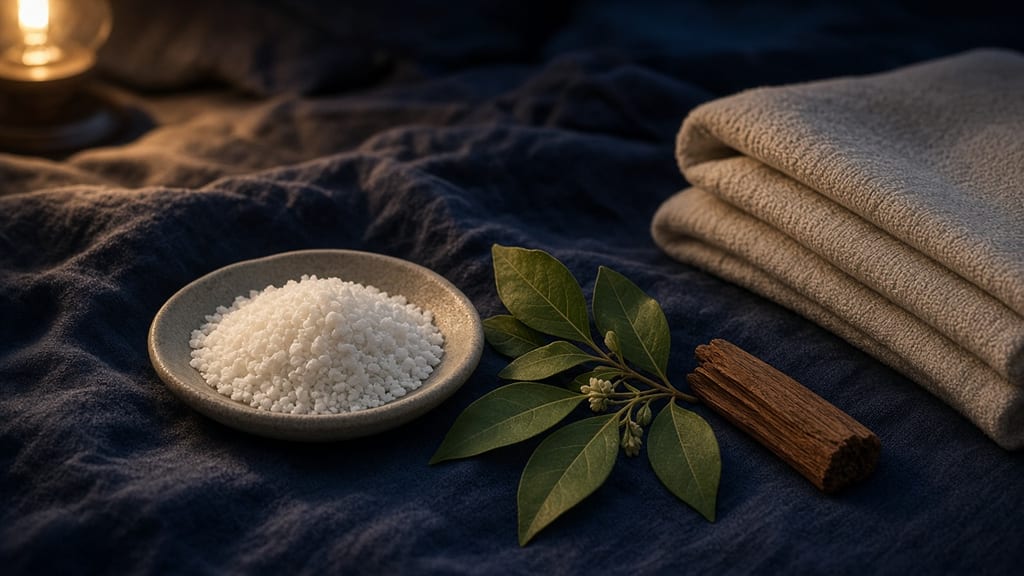
How to use magnesium spray on your feet before bed
How to use magnesium spray on your feet at bedtime: clean dry skin, a few sprays, a short massage, then socks or sheets. Plus why it can tingle and what it is.
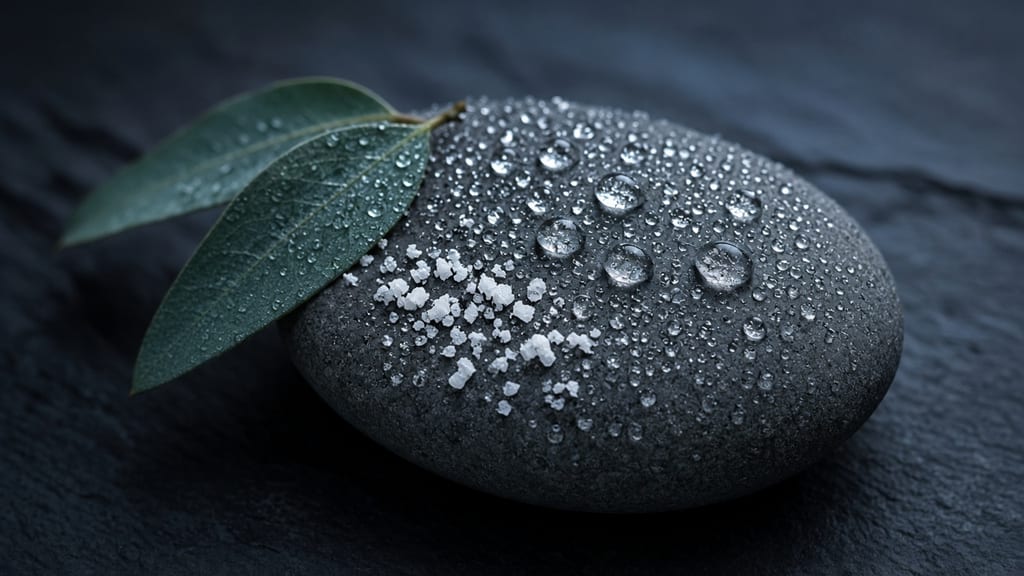
Why does magnesium spray sting or itch?
Magnesium spray can tingle because a concentrated salt solution dries on skin. Why it happens, how to make it gentler, and when to wash it off and stop.